Edexcel IGCSE Biology revision

Variety of living organisms questions

Compare the major groups of organisms using their cell structures, nutrition and other defining features.

Edexcel IGCSE Biology Subtopic 1.b

Variety of living organisms syllabus

Questions on variety of living organisms can test recall, calculations, explanations, diagrams, data handling and practical skills. You should be able to:

  • 1.2 compare the common features of eukaryotic organisms:
    • Plants: multicellular, with chloroplasts for photosynthesis and cellulose cell walls; store carbohydrate as starch or sucrose. Examples include maize, peas and beans.
    • Animals: multicellular, without chloroplasts or cell walls; usually show nervous co-ordination and movement, and often store glycogen. Examples include humans, houseflies and mosquitoes.
    • Fungi: no photosynthesis; usually a mycelium of hyphae with many nuclei, or single cells such as yeast. Chitin cell walls, saprotrophic nutrition by extracellular digestion and absorption, and possible glycogen storage. Examples include Mucor and yeast.
    • Protoctists: microscopic, single-celled organisms. Amoeba has animal-like features; Chlorella has chloroplasts; Plasmodium causes malaria.
  • 1.3 describe prokaryotes such as bacteria: single cells with a cell wall, cell membrane, cytoplasm, plasmids and a circular DNA chromosome, but no nucleus. Some photosynthesise; most feed on living or dead organisms. Examples include Lactobacillus bulgaricus, used to make yoghurt, and Pneumococcus, which causes pneumonia.
  • 1.4 define a pathogen and recognise that fungi, bacteria, protoctists and viruses may cause disease. Viruses are non-living particles, smaller than bacteria, with a protein coat and DNA or RNA. They reproduce only inside living cells. Examples include tobacco mosaic virus, influenza virus and HIV.

How to answer variety of living organisms questions

  1. Identify the characteristic or organism group being tested before selecting biological features.
  2. Use named examples and precise cellular or nutritional features when making comparisons.
  3. Follow the command word: state briefly, describe what is observed, and explain using linked biology.
  4. Support conclusions with evidence from any diagram, table or experimental result provided.

Variety of living organisms example questions and worked answers

These examples show how information in a diagram, graph or experimental context becomes part of a complete exam answer.

Example 1: Testing fungicides against wood decay

Adapted from June 2017, Paper 1B · Question 11(b)

Question 1

The photograph shows the logs left behind after an area of forest has been cut down.
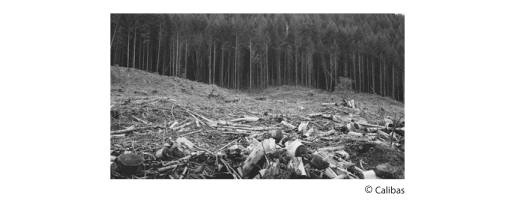
Photograph of a cleared forest area with cut logs and branches on the ground.

These logs are decomposed by fungi.

Some of the logs removed from the forest are used to make garden benches.

The photograph shows a garden bench.
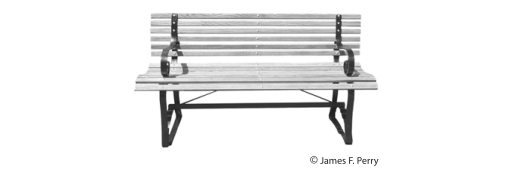
Photograph of a wooden garden bench.

The garden bench is painted with a fungicide solution.

This prevents the wood being decomposed because fungicide kills fungi.

There are different fungicides that can be used.

Design an investigation to find out which fungicide is best at preventing the decomposition of wooden logs.

Your answer should include experimental details and be written in full sentences.

Final answer

Cut equal-sized pieces from wood of the same species and age, and use several pieces for each fungicide. Apply a different fungicide to each group, using the same volume of solution, and expose all the pieces to the same type and amount of fungus. Keep the temperature and moisture the same for every group. Measure the mass of each piece before treatment and again after the same stated period, for example four weeks (at least one week). Compare the mean mass lost for each fungicide; the fungicide with the smallest mass loss is best at preventing decomposition.

Mark scheme points

  1. M1 Test different fungicides, using a separate group for each fungicide.
  2. M2 Use comparable wood, such as wood of the same species or age, or from the same tree.
  3. M3 Use more than one log or sample for each fungicide, or repeat the test.
  4. M4 Measure the wood’s mass before and after the test, or determine the change in mass.
  5. M5 State how long the test runs; the period should be at least one week.
  6. M6 Keep one listed condition the same, for example temperature, moisture, oxygen, volume of fungicide, or fungal exposure.
  7. M7 Keep a second listed condition the same. Any two of the listed conditions can earn the two standardisation points; the overall maximum is 6 marks.

Explanation

Testing different fungicides lets you compare them. Using similar wood and repeating the test makes the comparison more reliable. Keep other conditions the same so the fungicide is the main difference between groups. Measuring mass at the start and end shows how much wood has been lost during the stated period. Less mass lost means less decomposition, so the fungicide with the smallest mass loss works best.

Common mistakes

  • Changing the wood type, moisture or temperature between groups makes it harder to tell whether the fungicide caused the difference.
  • Giving only a final mass, or not stating the test duration, does not show the mass lost over a defined period.
  • The best fungicide gives the smallest mass loss, not the largest.
Example 2: Completing a bacterial cell

Adapted from January 2013, Paper 2B · Question 5(a)

Question 2

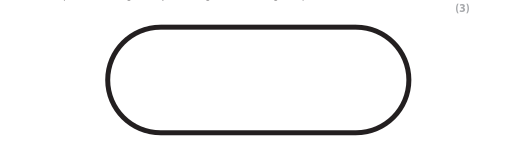
The diagram shows the cell wall of a bacterium. Complete the diagram by drawing and labelling the parts found inside the cell wall.

Incomplete diagram showing the cell wall of a bacterium, with the inside left for drawing and labelling.

Final answer

Inside the cell wall, draw and label a cell membrane, cytoplasm, a plasmid and the bacterial chromosome (DNA). Any three distinct features from this list are needed for full marks.

Cell wallCell membraneChromosome (DNA)PlasmidCytoplasm
A schematic answer showing all four possible features; the diagram is not to scale.

Mark scheme points

  1. M1 One correct feature: cell membrane, cytoplasm, plasmid, or nucleoid / chromosome / DNA.
  2. M2 A second distinct correct feature from that list.
  3. M3 A third distinct correct feature from that list. Nucleoid, chromosome and DNA count as one feature, not separate features.

Explanation

Show the cell membrane as a boundary just inside the cell wall, with cytoplasm inside it. Add a plasmid and the bacterial chromosome (DNA) within the cytoplasm. The question awards 3 marks, so three distinct listed features are enough; including all four makes the labels clear.

Common mistakes

  • Do not label a nucleus or nucleolus: these are rejected because bacterial DNA is not enclosed in a nucleus.
  • Do not count “chromosome” and “DNA” as two separate features.
  • Keep the cell membrane inside the cell wall; the wall is already shown in the question.

Practise Variety of living organisms questions

Build a focused practice set from this part of the Edexcel IGCSE Biology syllabus.