Example 1: Using a Diagram
Question 1
The company must decide between two renewable energy projects, a geothermal power station or a solar power station.
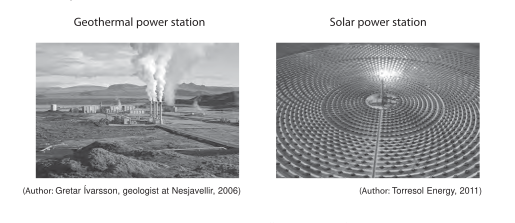
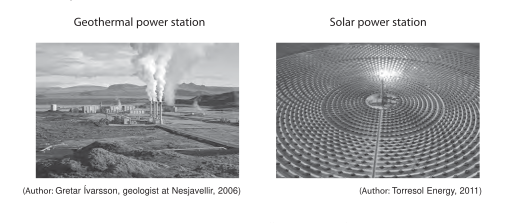
Explain how the location and the climate might affect the type of power station that the company chooses.
location
climate
Final answer
- M1 A solar power station is favoured at a low latitude, such as near the equator, where the Sun’s rays are more direct.
- M2 Solar power needs a large area of land without shadows from hills, trees or buildings.
- M3 A geothermal power station is favoured where there is accessible underground heat or hot water, for example in a volcanic or geologically active area.
- M4 A sunny climate with many hours of strong sunlight favours solar power; clouds, rain or short winter days reduce its output, whereas geothermal power is largely unaffected by the climate.
Mark scheme points
- M1 Location affects the Sun angle or latitude, affecting the suitability of a solar station.
- M2 The site must be suitable, for example with enough area for a solar array and no shadows.
- M3 Geological conditions determine whether an accessible source of heat or hot water is available for geothermal power.
- M4 Climate affects seasons, sunlight hours and sunlight intensity; geothermal power is not significantly affected by climate.
Explanation
Give separate effects of location and climate. For location, link the choice to the physical requirements of each type of power station: solar panels need direct sunlight and a large, unshaded site, while geothermal stations need underground heat or hot water.
For climate, explain that solar output depends on the amount and strength of sunlight. Cloud, rain and seasonal changes reduce the energy received. Geothermal energy comes from underground heat, so it is generally unaffected by these weather conditions.
Common mistakes
- Do not just state “hot country” or “volcanic area”; explain that the condition favours solar or provides accessible underground heat.
- Do not confuse climate with location: cloud, rain, seasons and sunlight hours are climate factors, whereas land area and geological activity are location factors.
- Do not claim that solar panels require hot weather; their output depends mainly on the intensity and duration of sunlight.
- A vague statement such as “renewable energy is better” does not explain how the site or climate affects the choice.
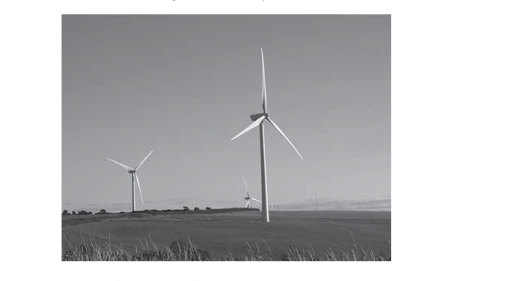 What is the useful energy transfer in a wind turbine?