Example 1: Using a Diagram
Question 1
A student uses this method to investigate the speed of sound in air.
- set up an oscilloscope to detect and display a sound wave
- use a computer and a speaker to produce a sound of known wavelength
- use the oscilloscope to determine the frequency of the sound wave
- use a formula to calculate the speed of sound
The diagram shows the oscilloscope screen and the oscilloscope settings.
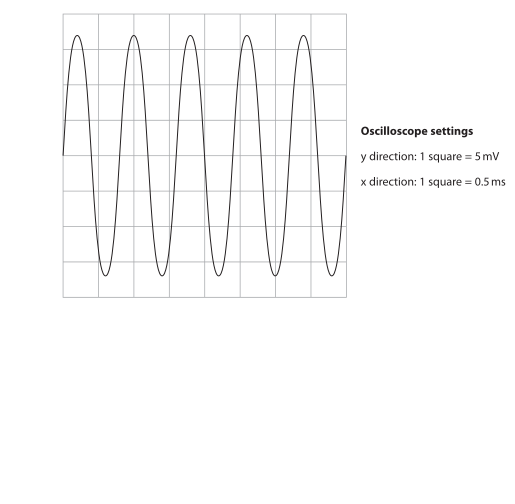
The wavelength of the sound wave is 27cm.
Calculate the speed of sound.
speed of sound = m/s
Final answer
Speed of sound = 340 m/s
Using the unrounded value gives 337.5 m/s, which is also accepted.
Mark scheme points
- M1 Use the relationship speed = frequency × wavelength.
- M2 Substitute the frequency and wavelength correctly: 1250 × 0.27.
- M3 Obtain a speed of 340 m/s or 337.5 m/s.
Explanation
The frequency found from the oscilloscope trace is 1250 Hz. Convert the wavelength from centimetres to metres before substituting:
wavelength = 27 cm = 0.27 m
speed = frequency × wavelength
speed = 1250 × 0.27
speed = 337.5 m/s ≈ 340 m/s
The answer must be given in metres per second because the wavelength was converted to metres.
Common mistakes
- Using 27 instead of 0.27 for the wavelength, causing a factor-of-100 error.
- Using the period instead of the frequency in the speed equation.
- Writing the formula without substituting the numerical values or omitting the unit m/s.
- Examiners reported that candidates who had calculated a frequency generally used it correctly in this part, so show the frequency clearly in your working.
